
- Career Explorer
- Sports Psychologist – Courses, Salary, Colleges & Career Path
Sports Psychologist
Help athletes develop the mental skills, confidence, and resilience needed to perform at their best.
Future Demand Rating
★★★★★
AI Impact
AI Resistant
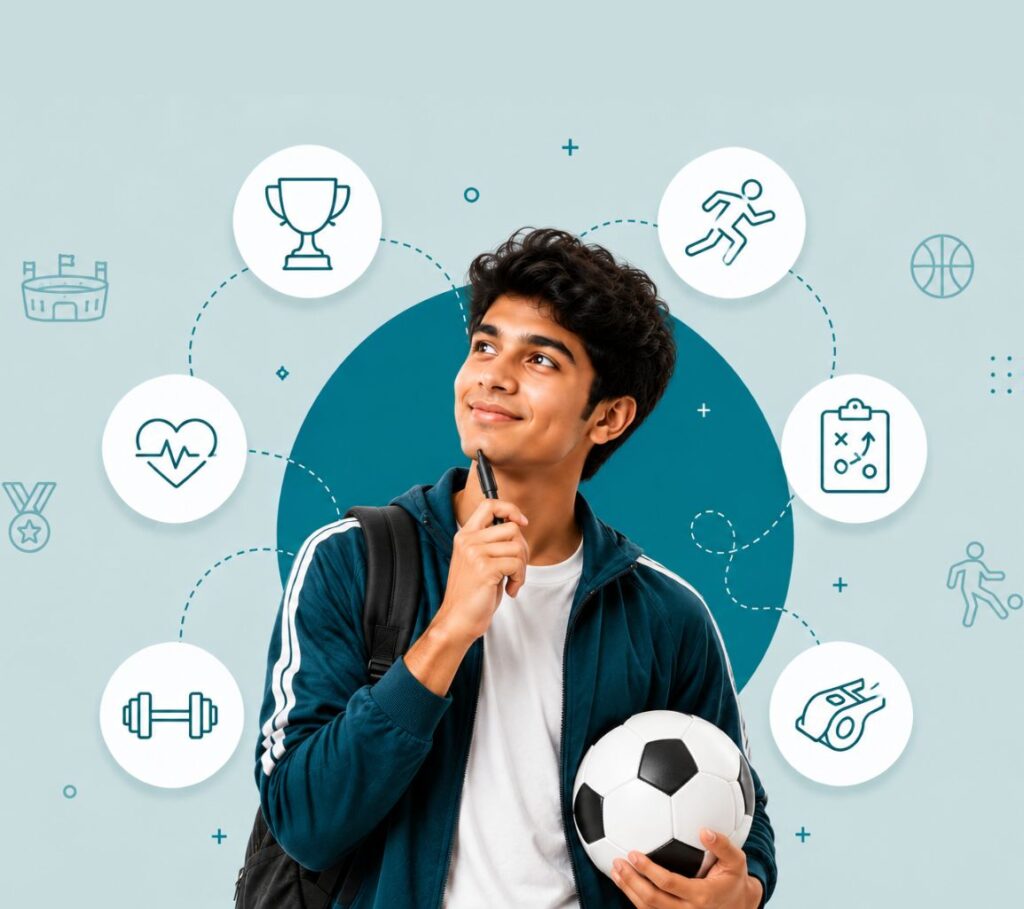
The Role
What you'll do
Sports Psychologists help athletes manage performance pressure, build confidence, improve focus, and develop a strong mental approach to competition.
You may work with individual athletes, teams, coaches, or sports organizations.
Improve focus and concentration
Help athletes manage anxiety and pressure
Build confidence and mental resilience
Support athletes through injuries or setbacks
Develop pre-match mental routines
Fit Check
You'll enjoy this career if...
You love sports and psychology
You enjoy understanding people’s thoughts and behavior
You like helping people perform at their best
You’re patient, empathetic, and a good listener
Getting There
Class 11–12 streams
BEST
Any stream
ALSO POSSIBLE
Science with Psychology
IB
Psychology + relevant subjects
UG Courses
B.A. Psychology
B.Sc. Psychology
B.A. Applied Psychology
B.Sc. Sports Science
B.A. Sports Psychology
Getting There
Top colleges
India
Christ University
Lady Shri Ram College
University of Delhi
Amity University
Manipal Academy of Higher Education
International
University of North Texas
University of Michigan
Loughborough University
University of Southern Queensland
University of Queensland
Who's Hiring
Top employers
Professional Sports Teams
Olympic Organizations
Sports Academies
Fitness Organizations
Universities
Sports Clinics
Private Practices
The Numbers
Salary range
Starting
₹4–8 LPA
Top Earner
₹20–40+ LPA
AI Impact
AI Resistant
AI can support mental-performance tracking and personalized training tools, but building trust, understanding emotions, and providing human psychological support remain difficult to automate.