
Let’s start with a simple truth most senior leaders already sense.
Teams don’t struggle because people lack talent. They struggle because leaders don’t always see how that talent shows up or how differently it shows up across individuals.
One person thinks out loud. Another needs time and space before speaking. Someone thrives on clarity and structure; someone else comes alive when there’s ambiguity and room to experiment. None of this is new. Yet many organisations still manage people as if everyone is wired the same way.
Becoming more aware of your team members’ strengths, work styles, values, and collaborative potential isn’t a “soft” leadership skill anymore. It’s a core capability, especially in organisations navigating scale, speed, and complexity.
And here’s the good news: awareness doesn’t require becoming a psychologist. It requires better habits, sharper attention, and a shift in how leaders interpret everyday behaviour.
Let me explain.
Awareness Starts Before Methods: The Environment Matters
Before leaders try to understand their teams more deeply, the organisation needs to create the right conditions.
If people don’t feel safe expressing how they think, work, or disagree, awareness stays superficial. Leaders end up reading performance, not potential.
Organisations that genuinely want leaders to build strengths awareness in teams usually have a few things in place:
- Clear people policies that reward contribution, not conformity
- A culture where feedback isn’t treated as a verdict
- Systems that encourage reflection, not just execution
Without this foundation, even the best leadership coaching conversations become performative. With it, everyday interactions become rich data points.
And that’s where awareness really begins.
Rethinking Performance Reviews as Windows, Not Files
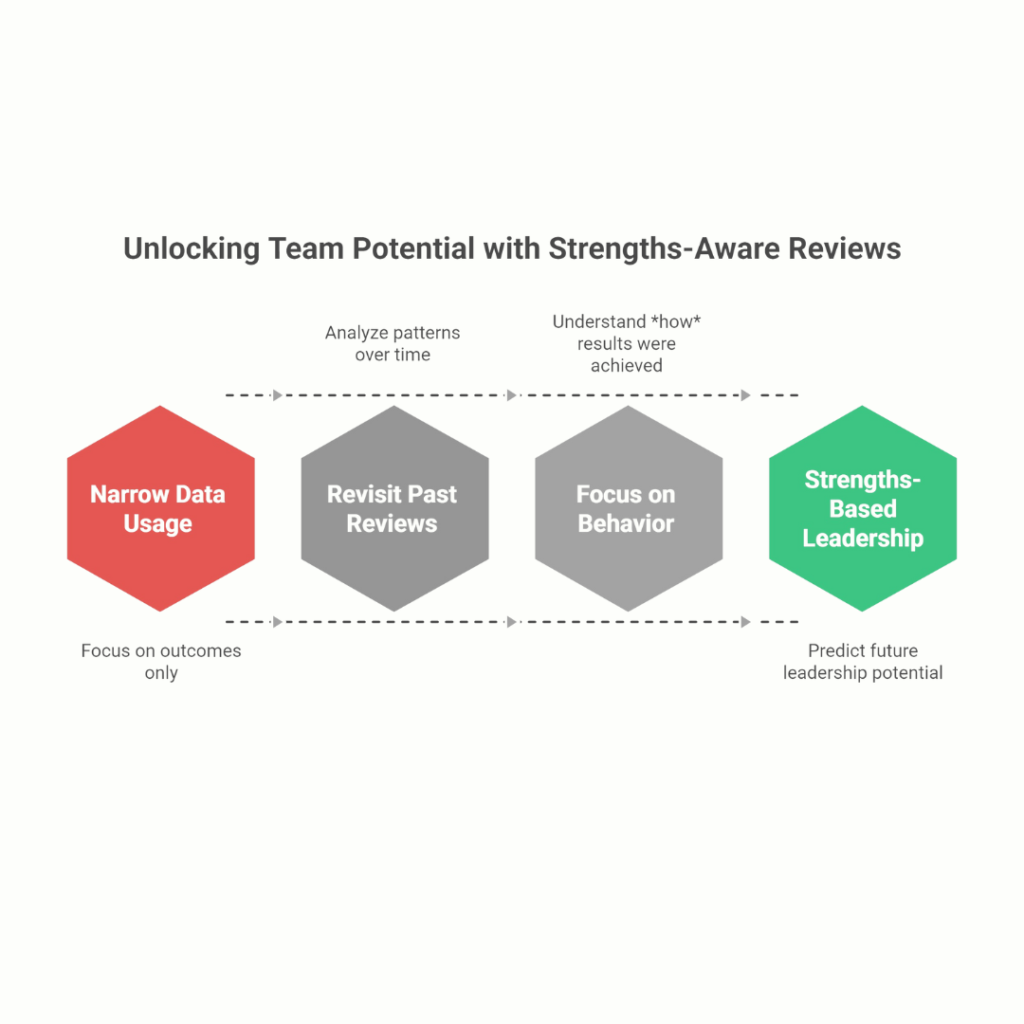
Most organisations already have performance reviews. The problem isn’t the process; it’s how narrowly the data is used.
Performance reviews often focus on outcomes: targets met, deadlines missed, numbers delivered. Useful, yes. Complete? Not even close.
If leaders revisit the last three to four years of reviews with a different lens, patterns begin to emerge:
- Who consistently performs across changing contexts?
- Who adapts fastest when roles evolve?
- Who elevates team output, not just individual results?
This is where understanding team strengths and work styles starts to take shape.
A strengths-aware leader looks beyond what was achieved and pays attention to how it was achieved. Did the person bring people together? Did they simplify complexity? Did they anticipate risks before others noticed?
These behavioural clues are far more predictive of future leadership than any single rating.
Observable Attributes: Making the Invisible Visible
Some leadership qualities don’t fit neatly into scorecards. Ownership. Integrity. Judgement. Emotional steadiness.
Most managers recognise these traits intuitively, but intuition varies wildly. One leader’s “high ownership” is another leader’s “overstepping boundaries.”
This is where common criteria for observable attributes matter.
Rather than abstract labels, strengths-aware organisations define behaviours in plain language:
- What does ownership look like during a tough quarter?
- How does integrity show up when priorities clash?
- What does collaboration look like across functions, not just within teams?
When leaders share a common vocabulary, awareness becomes collective, not subjective. It also allows strength psychology to be applied consistently, rather than as a personal preference.
Understanding Work Styles Without Boxing People In
One of the fastest ways to misread talent is to confuse work style with attitude.
A quiet team member isn’t disengaged. A vocal one isn’t always confident. Someone who questions plans isn’t resistant; they may simply process risk differently.
Leaders who want to build strengths awareness in teams get curious about work styles without turning them into labels.
They notice patterns such as:
- Who prefers clarity before action, and who figures things out while moving
- Who draws energy from collaboration, and who does their best thinking solo
- Who focuses on possibilities, and who instinctively spots constraints
These differences are gold for collaboration, not obstacles to manage away.
When leaders understand work styles, they stop forcing sameness and start designing smarter collaboration. Meetings improve. Decisions speed up. Friction becomes productive.
That’s strengths-driven team leadership in practice.
The Quad Lens: Seeing the Whole Person at Work
For leaders trying to understand collaborative potential, a single lens is never enough.
A useful approach is to view team members through four interconnected angles:
- Past Performance – Not just results, but consistency and context
- Role Fitness – How naturally someone operates within current demands
- Organisational Fit – How their values and behaviours support the culture
- Core Capabilities – The strengths they rely on when under pressure
Looking at these together prevents a common leadership trap: promoting based on output alone.
More importantly, it helps leaders spot where someone may thrive next, not just where they’ve already succeeded.
Values: The Quiet Driver of Behaviour
Values are rarely discussed in day-to-day management conversations, yet they quietly shape every decision.
When leaders understand what their team members care about, motivation stops being a guessing game.
Some people value autonomy. Others value mastery. Some care deeply about fairness; others about pace and progress.
Leaders who pay attention to values notice things like:
- Why do two equally capable people respond differently to the same change
- Why certain projects energise someone while others drain them
- Why conflict arises not from personality, but from value clashes
This level of awareness transforms how leaders assign work, resolve tension, and build trust.
It also strengthens leadership self-awareness and team awareness because leaders begin to recognise their own values in the mix.
Collaboration Isn’t a Skill. It’s a Pattern.
Many organisations talk about collaboration as if it’s a single capability. It isn’t.
Collaboration is a pattern of interactions shaped by strengths, work styles, and values.
Some people connect ideas across silos. Some create psychological safety. Some bring momentum. Some bring rigour.
Leaders who understand collaborative potential stop asking, “Who should be on this project?” and start asking, “What mix of strengths does this project need?”
This shift alone can dramatically improve team outcomes, especially in cross-functional and globally distributed environments.
Involvement as Insight, Not Exposure
One of the most reliable ways to build awareness is through meaningful involvement.
When leaders intentionally involve team members in enterprise-level initiatives, something interesting happens. Strengths surface naturally.
You see:
- Who steps up without being asked
- Who asks better questions, not just more questions
- Who connects dots across stakeholders?
- Who remains steady when ambiguity rises
When senior leaders observe these moments not to evaluate, but to understand, awareness deepens quickly.
This isn’t about testing people. It’s about watching them do real work, in real conditions.
The Leader’s Role: From Evaluator to Observer
Here’s a mild contradiction worth naming.
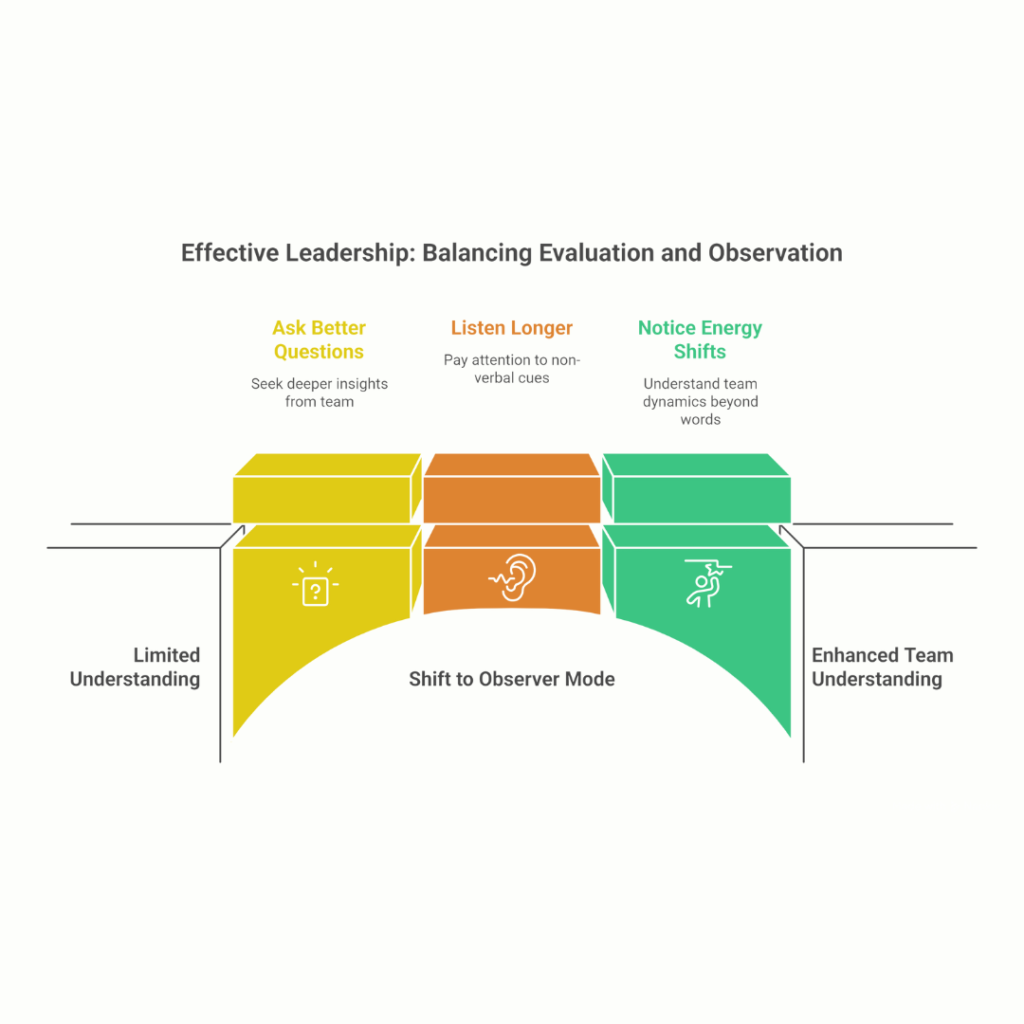
Leaders are responsible for evaluating performance. Yet awareness grows fastest when leaders temporarily suspend judgment.
The most effective leaders shift between two modes:
- Evaluator mode, when decisions must be made
- Observer mode, when understanding is the goal
In observer mode, leaders ask better questions. They listen longer. They notice energy shifts, not just words.
This is where strengths psychology for team leaders quietly operates, not as a framework on paper, but as a way of paying attention.
Why Strengths Awareness Scales Are Better Than Fixing Gaps
Many leadership models focus on closing gaps. Improve weaknesses. Correct behaviours. Address deficits.
There’s nothing wrong with improvement. But it doesn’t scale well.
Strengths-based team development works because it builds on what’s already present. It accelerates growth instead of constantly resetting it.
When leaders understand their team’s strengths:
- Development conversations become more engaging
- Feedback feels specific, not generic
- Career paths feel personal, not prescribed
This approach also supports leadership coaching for high-potential talent without isolating “high potential” as a special category.
Everyone grows. Some simply grow faster.
Making Awareness a Leadership Habit
Awareness isn’t built through one workshop or one conversation. It’s built through habits.
Small ones.
- Asking “What brought you energy this week?”
- Reflecting on how decisions were made, not just outcomes
- Rotating leadership in meetings to observe different strengths
- Debriefing collaboration after projects, not just results
Over time, these habits shape leaders who instinctively understand their people.
That’s how strengths psychology shows up in everyday leadership, not as theory, but as practice.
The Strategic Payoff
For CHROs, CEOs, and Boards, this isn’t just a people story. It’s a business one.
Teams led by strengths-aware leaders tend to show:
- Better collaboration across boundaries
- Stronger engagement without constant intervention
- More reliable leadership pipelines
- Healthier responses to change
Perhaps most importantly, they create workplaces where people feel seen, not managed.
And when people feel seen, they contribute more of what they do best.
Closing Thought
Becoming more aware of your team members’ strengths, work styles, values, and collaborative potential isn’t about doing more.
It’s about seeing more.
When leaders slow down just enough to notice patterns, energy, and behaviour, leadership becomes less about control and more about connection. That’s where strong teams are built.
And that’s where leadership quietly levels up.