
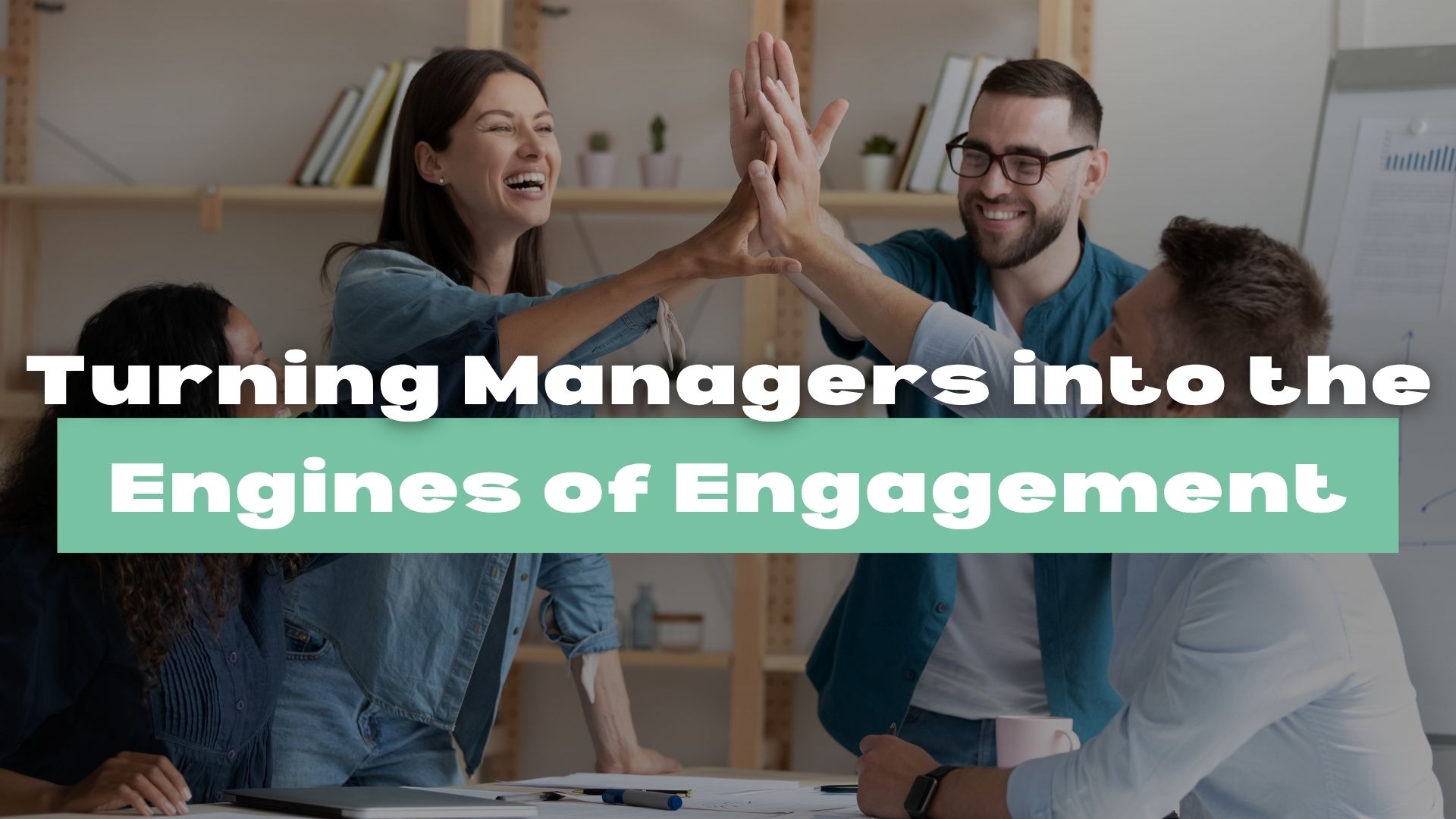
There’s a quiet irony in organisational life: the people who carry the weight of culture every single day rarely feature in culture conversations. Middle managers sit at the heart of execution, yet often at the edge of attention. They solve conflicts, interpret strategy, steady morale after tough reviews, and make sure the machine moves, even when it groans.
Engagement doesn’t falter because managers don’t care; it falters because they are asked to coach, perform, mediate, and motivate while juggling constraints that stretch them thin. Many want to build great teams. They simply run out of bandwidth, clarity, and sometimes the courage to lead in the way they wish they could.
And when leaders rediscover their best leadership instincts, their natural strengths, their most effective ways of influencing and supporting others, they don’t just perform better. They help entire teams breathe easier.
The Reality Check
Middle managers sometimes get treated as the organisational bottleneck, the mythical “frozen middle” that slows progress. But that phrase ignores context. They are asked to deliver business outcomes with urgency while nurturing people with patience. That tension isn’t a flaw; it’s the job. And it’s exhausting without the right support.
A surprising number of capable managers quietly wonder whether they’re good enough. Not in performance metrics, but in human impact: Am I showing up well for my team? Am I giving them what they need? That vulnerability doesn’t make them weak; it makes them the most human layer in the organisational pyramid.
Why Middle Managers Decide Engagement
Research has repeated this for years in one form or another: employees don’t usually quit companies; they step away from managers. But beyond attrition, managers influence effort, energy, curiosity, and psychological safety.

A single team leader shapes lived experience more than any shiny wall poster about values or culture. Engagement isn’t the result of town-hall declarations; it grows through everyday micro-interactions, the one-on-ones that feel genuine, the feedback given with care, and the informal check-ins that happen when someone looks distracted in a Zoom square.
Culture, in practice, is a series of small conversations, not a branding exercise.
The Big Shift: From Task Owners to Engagement Multipliers
The manager role has evolved dramatically. They’re not merely task distributors anymore; they’re interpreters of ambiguity, morale architects, and in many ways, first-line coaches. They help people make meaning, not just meet deadlines.
Yet very few of them were prepared for this shift. They were promoted for competence in execution, then suddenly expected to excel in emotional intelligence and developmental coaching. It’s understandable that they default to familiar behaviours.
This is where strengths-based development comes in subtly and powerfully. When managers understand their natural leadership drivers, whether it’s relationship-building, strategic clarity, influence, or execution, they stop forcing themselves to mimic other leaders. They start leading in a way that feels natural, sustainable, and credible.
The Problem With Traditional Company Playbooks
Many engagement initiatives are crafted beautifully at the top, full of vision and frameworks, but lose warmth and practicality by the time they reach the middle layer. Executives attend retreats; managers receive SOPs.
The cascade communication model, once functional, now feels stiff. It assumes culture flows downward like instructions, rather than emerging through personal connection and trust.
What’s missing is simple: programs designed for the human in the role, not just the role itself. Tailored support that considers each manager’s personality, motivations, and strengths, instead of expecting everyone to perform culture the same way.
Because engagement doesn’t demand uniformity, it demands authenticity.
What Works Instead, Practical Levers
True engagement systems equip managers not with scripts, but with anchors.
The fundamentals are surprisingly human:
- Self-awareness, understanding one’s natural strengths and blind spots (tools like CliftonStrengths help here without being intrusive or philosophical)
- Psychological safety, not as a slogan, but as a practised behaviour
- Small rituals and habits that reinforce connection, not 100-page manuals
A manager who knows their style leads with clarity. A manager who feels safe creates safety. And a manager who learns habits that encourage people… eventually builds a team that runs on trust rather than supervision.
Tactics
Practicality matters. Managers don’t need slogans; they need routines they can sustain. Some that consistently help:
- Regular strengths-centric check-ins that explore not just workload, but energy and motivation
- Simple leadership prompts, such as “What support would make this easier?” or “What are you proud of this week?”
- Story-driven sharing, celebrating wins, unpacking learnings, and normalising vulnerability
- Peer circles where managers exchange ideas instead of carrying the weight alone
- Metrics that matter, not only ESAT scores, but signs like team initiative, collaboration, and resilience during tough phases
None of these needs fanfare. They need rhythm.
Culture in Practice
A fascinating shift occurs when managers understand their strengths deeply: imitation disappears. Instead of trying to copy an admired VP’s presence or tone, they discover their own leadership texture.
Someone who leads best with empathy stops doubting their gentleness.
Someone who thinks strategically learns to translate complexity simply.
Someone who builds relationships intuitively uses that gift as a cultural engine rather than apologising for it.
And teams feel that authenticity immediately. Confidence spreads. Initiative builds. Engagement rises not through grand interventions, but through quietly consistent behaviour.
Final Thought
Multipliers aren’t born with some rare behavioural DNA. They are developed through environments that give them clarity, feedback, trust, and space to be who they are, while growing into who they can become.
If organisations help managers see themselves more clearly, managers will help employees feel seen. And in that simple exchange, humanity for humanity, engagement turns from a metric into a lived experience.
That is how culture truly moves: not through announcements, but through people who feel supported enough to support others.