

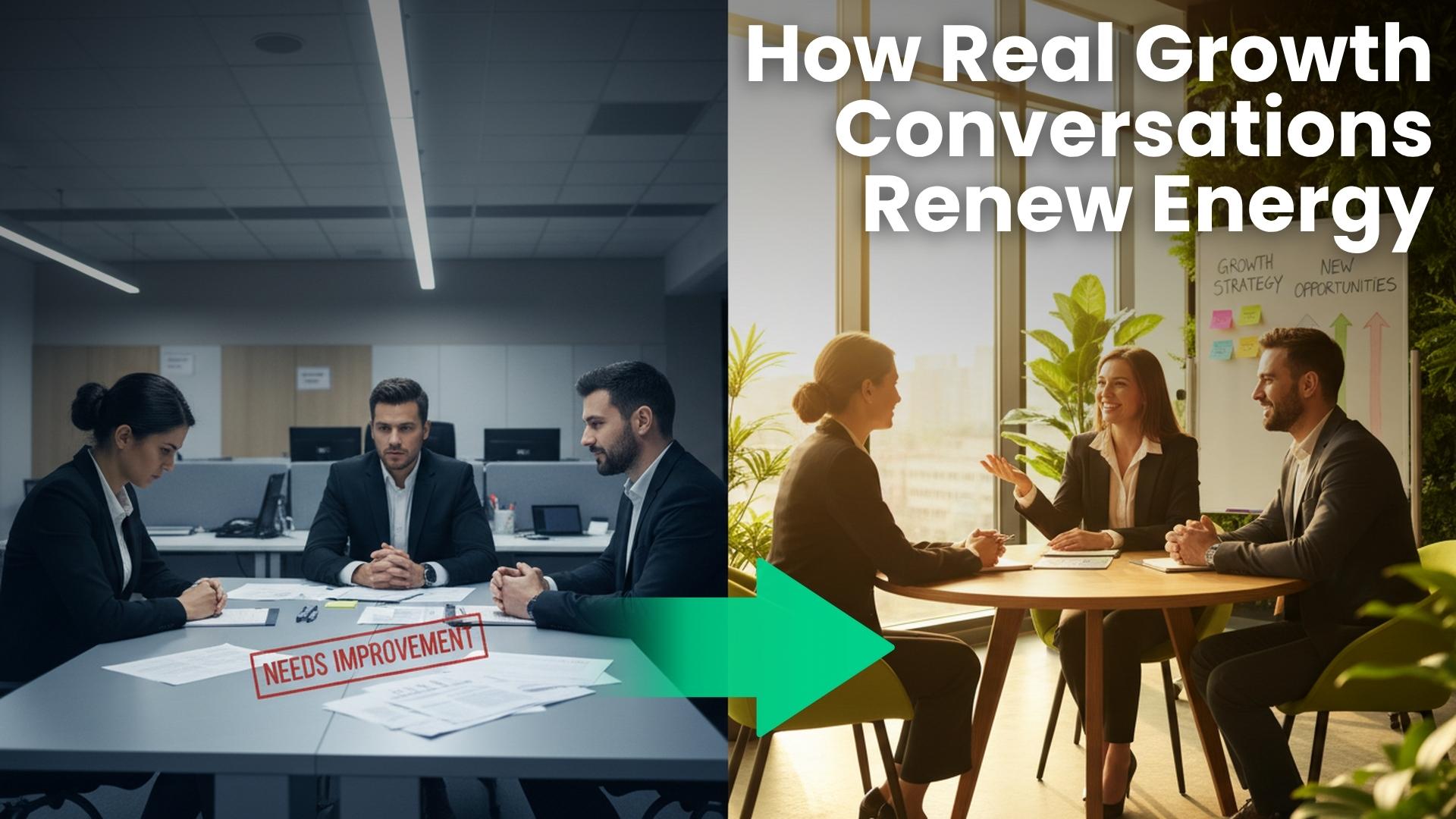
There’s something almost sacred about work. Not the tasks or the deadlines, but the quiet, daily pursuit of being useful, getting better, and earning dignity through effort. So when a conversation meant to help us grow leaves us feeling smaller, it stings more than we admit.
Interestingly, nobody plans it that way.
Most feedback conversations begin with the best intentions. Leaders prepare thoughtfully, employees arrive hopeful, and both sides expect clarity and encouragement. Yet many leave feeling heavy. Not defeated, necessarily, just misunderstood, or analysed more than appreciated.
The truth? Growth conversations are one of the most powerful accelerators of talent and culture when we get them right. And we’re closer than we think.
The Intent Is Pure. The Experience Isn’t Always.
Most managers genuinely want their people to succeed. Look closely and you’ll see it: the late-night prep before a conversation, the careful wording, the desire to support without overwhelming. But good intent sometimes collides with old habits:
- Focusing first on what’s missing instead of what’s strong
- Treating improvement like correction instead of expansion
- Assuming feedback is a tool, not a relationship
No villains here, just systems and traditions built in a different era, when certainty was valued more than curiosity and performance discussions sounded like reports rather than coaching moments.
People Don’t Fear Growth, They Fear Misunderstanding
Ask anyone who cares about their work if they want feedback. They almost always say yes. We crave progress. We want to rise.
What we resist is being reduced. Being talked to, not talked with. Feeling like the conversation is about what we lack instead of who we are becoming.
There’s a quiet emotional truth behind every development conversation:
“Help me see my possibilities, not my limitations.”
When that need is honoured, people don’t just improve; they expand. They volunteer ideas, take bigger swings, and stretch beyond comfort. A strengths-first lens doesn’t avoid constructive direction; it simply roots it in identity instead of deficiency.
The Heart of Great Leadership Today: Energy, Not Evaluation
Work has shifted. People expect leaders to help them make meaning, build capability, and feel seen, not just manage tasks. The modern manager sits at the intersection of support and stretch. And increasingly, their influence isn’t measured only in performance charts, but in emotional climate:
- Do team members feel confident after a conversation?
- Are they clearer, more focused, more courageous?
- Do they see the next step in their growth as exciting, not threatening?
When leaders start with strengths, that natural lens through which someone thinks, relates, solves problems, or drives results, people instinctively lean forward. They feel recognised, not diagnosed. Their aspiration switches on.
A Subtle Shift That Changes Everything
Consider two openings to a feedback conversation:
Version A:
“Let’s talk about a few areas where you need to improve.”
Version B:
“You have an ability to bring clarity and calm to projects. Let’s explore how we can build on that, and also where you might want a new stretch.”
Same intent. Completely different emotional doorway.
This is not softness. It’s precision. When strengths frame the conversation, feedback lands as an opportunity, not judgment.
What Real Growth Sounds Like Today
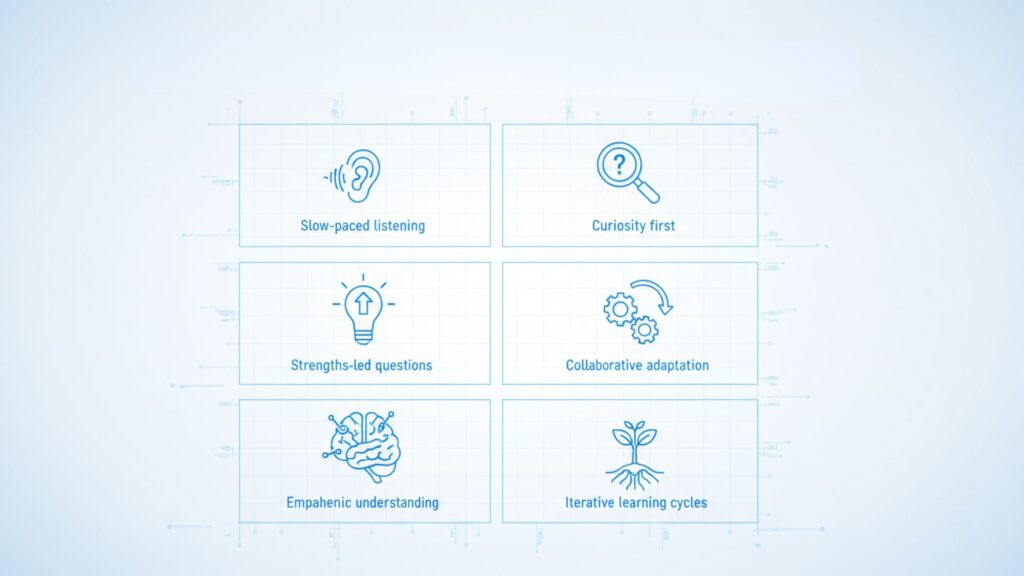
Conversations that energise aren’t complicated. They’re simply more human, more curious, and slightly slower in pace, like someone actually listening, not performing a process.
Questions that help:
- “What part of your work feels most meaningful right now?”
- “Where did you feel in flow last week?”
- “Which task or challenge do you want more ownership of?”
- “What support helps you grow fastest?”
And yes, when something isn’t working, we address it. Openly. Directly. But grounded in belief, not scrutiny.
The Strength Ripple
When leaders help people see themselves clearly, their style, their inherent patterns, their natural edge, something beautiful happens. Motivation becomes internal. Individuals start leading like themselves instead of mimicking someone else’s playbook.
Confidence rises. Initiative follows.
And culture evolves quietly, moment by moment, through ordinary conversations that treat capability as a seed, not a score.
A Gentle Reframing
Feedback isn’t broken.
People aren’t resistant.
Managers aren’t careless.
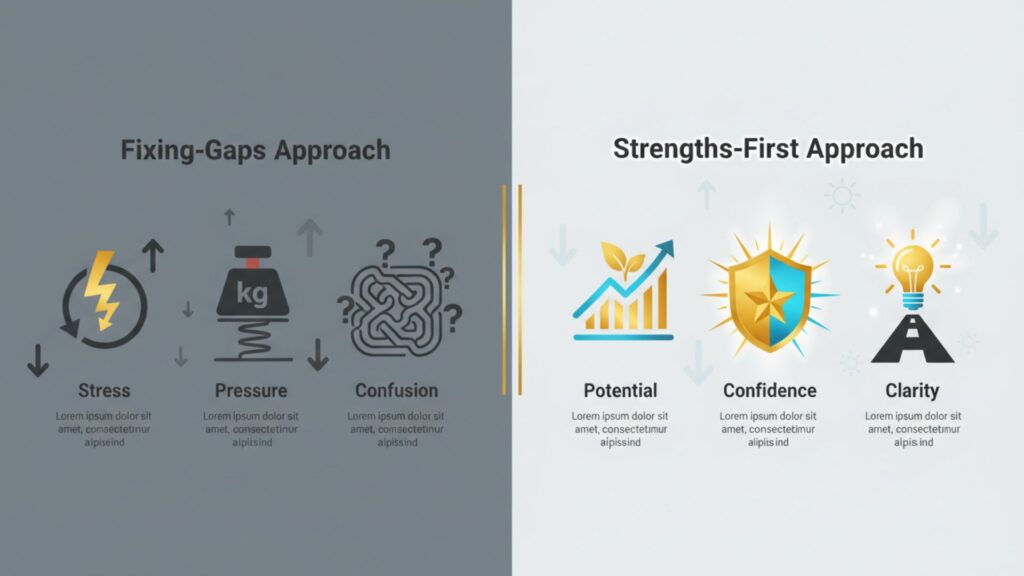
What’s changing is the philosophy of growth itself, from fixing gaps to amplifying potential first. The world is asking leaders to enable courage, not compliance; confidence, not caution.
And when we bring that lens into development conversations, strengths become not a tagline, but a way of seeing. Then feedback doesn’t shrink someone’s world, it widens it.
The Invitation
If there’s one shift worth making this quarter, perhaps it’s this:
Begin every feedback conversation from the assumption of talent.
Not as flattery, but as truth: most people carry more potential than they’ve used yet. They don’t need a spotlight on their shortcomings; they need someone to sit beside them and ask, “Where will you grow next, and how do we help you succeed?”
When leaders approach development like that, motivation doesn’t just survive, it turns into momentum.

You really make it seem so easy with your presentation but I find this matter to be really
something that I think I would never understand.
It seems too complex and extremely broad for me.I am looking
forwar for your next post, I’ll try to get the hsng of it!