
Introduction: Why Middle Management Holds the Real Power
Let’s be honest, middle managers rarely get the spotlight, yet they carry more organisational weight than most realise. They’re the bridge between vision and execution, strategy and people, boardroom and breakroom. In a large, globally distributed organisation, they’re the steady hands holding together diverse teams, multiple time zones, and sometimes, conflicting expectations.
But here’s the paradox: while middle managers are essential, they’re often the most overstretched, underdeveloped group in the company. Leadership development for middle managers tends to be one-size-fits-all, with little consideration for individual motivations or the evolving realities of work.
Now, as companies face burnout, disengagement, and what some call the “great detachment,” developing authentic, confident, and connected leaders at this level is no longer optional; it’s the only way to build sustainable performance.
So the real question becomes how global organisations can groom their middle managers not just to manage, but to lead with clarity, purpose, and influence?
Who Are Middle-Level Managers and Why They Matter More Than Ever
Middle-level managers are the glue of any large organisation. They translate strategy into action, lead teams through ambiguity, and strike a balance between performance and empathy. They aren’t just implementers; they are culture carriers, decision-makers, and coaches rolled into one.
Traditionally, their job was about ensuring compliance and meeting targets. But that definition has changed dramatically. The modern middle manager must do far more inspire people, champion diversity, build collaboration across borders, and maintain morale when teams are exhausted or remote.
Think of them as the transmission system of the company, the ones who ensure energy from leadership doesn’t dissipate before it reaches the ground. When that system weakens, execution falters. And that’s why strengthening middle management is one of the smartest investments a global company can make.
The Leadership Gap in Global Middle Management
Many organisations already run leadership programs. Yet, if you ask middle managers how effective they are, you’ll often hear polite silence or quiet scepticism.
Why? Because most programs focus on skills, not mindset. They try to “train” leaders rather than develop them. They overlook personal strengths, context, and lived experiences, especially in a global workforce.
In large, distributed organisations, cultural nuance matters. What motivates a manager in Bangalore may not resonate with someone in Berlin. And yet, leadership principles, empathy, clarity, and adaptability remain universal. The challenge is how to develop them in ways that feel authentic, personal, and sustainable.
That’s where innovation in leadership development comes in, not through grand programs or heavy frameworks, but through experiences that feel human, relevant, and deeply energising.
Innovative Ideas to Develop Leadership at the Middle Level
1. Personalised Leadership Pathways
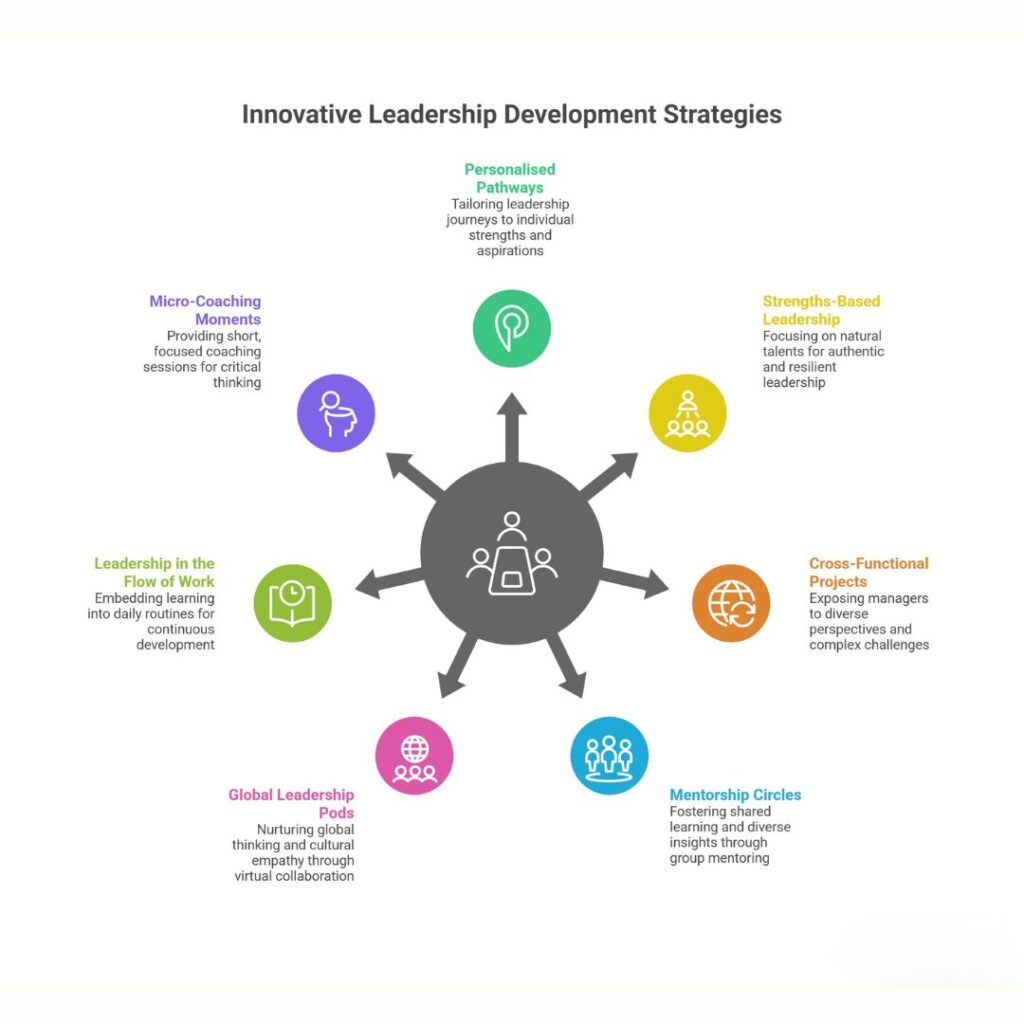
Every manager’s leadership journey looks different. Some thrive on collaboration, others on quiet reflection. Instead of rigid programs, organisations can design personalised leadership pathways and dynamic learning experiences based on an individual’s unique strengths, values, and growth aspirations.
For instance, a manager who excels at strategic thinking could be encouraged to mentor others on problem-solving, while another who shines in relationship-building might lead culture initiatives. The idea is to let managers grow through what they’re naturally good at, not through endless “competency checklists.”
2. Strengths-Based Leadership for Managers
This approach is also emphasised in the Strengths Master’s Leadership Program, which focuses on identifying what energises individuals rather than “fixing” their weaknesses. When middle managers lead from their strengths, they become more authentic and resilient.
A strengths-based leadership approach helps managers understand their natural patterns, how they make decisions, communicate, and influence. It also empowers them to build complementary teams, where diverse strengths work together rather than compete.
The result? Teams feel seen, managers feel confident, and leadership becomes sustainable, not just performative.
3. Cross-Functional “Stretch” Projects
One of the most effective and underrated ways to develop leadership in middle management is through stretch projects. Assigning managers to cross-functional or global initiatives exposes them to broader perspectives, strategic thinking, and complex problem-solving.
Imagine a supply chain manager leading a digital transformation project with HR and IT stakeholders from three continents. That kind of exposure builds not just skill, but empathy and adaptability qualities every future leader needs.
The trick is to balance challenge with support. Stretch projects shouldn’t feel like punishment; they should feel like a meaningful opportunity to grow.
4. Mentorship Circles and Reverse Mentoring
Formal mentoring still matters, but in globally distributed organisations, it needs a refresh. Instead of traditional one-to-one mentoring, companies can create mentorship circles, small groups where middle managers, senior leaders, and even emerging talents exchange experiences and insights.
And then there’s reverse mentoring, where younger professionals help senior leaders understand new technologies, generational perspectives, and evolving workplace expectations. These interactions humanise leadership and create a culture of shared growth.
It’s also a subtle but powerful way to strengthen inclusion because everyone gets to be both teacher and learner.
5. Global Leadership Pods
Here’s an idea: more companies are experimenting with leadership pods. These are small, diverse cohorts of middle managers from different geographies who work together virtually on leadership challenges or real business problems.
A manager from Singapore might pair with colleagues from London and São Paulo to brainstorm solutions to hybrid work engagement. Through structured collaboration and peer coaching, these pods nurture global thinking and cultural empathy.
It’s like having a mini international leadership lab minus the expensive travel.
6. Leadership in the Flow of Work
Not all learning has to happen in workshops or classrooms. Leadership can be developed in the flow of work. That means embedding reflection, feedback, and micro-learning moments into daily routines.
For example, managers could end team meetings by sharing a quick “leadership reflection” on what worked, what didn’t, and what they’d do differently. Or use short digital nudges that encourage self-awareness and recognition.
When learning feels like part of the job, not an interruption, it actually sticks.
7. Micro-Coaching Moments
Leadership coaching is often reserved for senior executives, but middle managers need it more. Micro-coaching: short, focused sessions that tackle real-time challenges help managers think critically and act intentionally.
Senior leaders can be trained to provide these quick, meaningful check-ins. It’s not about solving problems for managers, but helping them think through situations with clarity. Over time, these small moments add up to big behavioural shifts.
This is another area where strengths-based leadership for managers becomes powerful; it turns coaching into a strengths conversation rather than a performance correction.
Related Blog: How to Turn Middle Managers into Multipliers of Engagement
Building a Leadership Culture Around Well-Being and Balance
Leadership isn’t just about productivity; it’s about energy. Middle managers are often the first to experience burnout and the last to ask for help. If organisations expect them to drive engagement and performance, they need to ensure well-being is built into the leadership culture itself.
This means rethinking how success is defined, not by how long someone stays online, but by how sustainably they perform. Encouraging open conversations about mental health, balance, and workload helps managers lead with empathy rather than exhaustion.
When leadership development programs include mindfulness, emotional regulation, and psychological safety, they don’t just create better managers; they create better humans.
Leadership Development Frameworks That Work Globally
Global organisations often struggle with consistency. The key is to balance structure with flexibility. A strong leadership development framework provides guiding principles, but leaves space for local adaptation.
Some universal components include:
- Self-awareness and reflection practices
- Strengths-based coaching and feedback models
- Cultural intelligence and inclusivity training
- Strategic thinking and decision-making simulations
The framework should encourage experimentation, allowing managers to apply what they learn in real contexts, reflect, and refine their approach. Leadership isn’t theoretical; it’s lived.
Developing Future-Ready Leadership in a Global Organisation
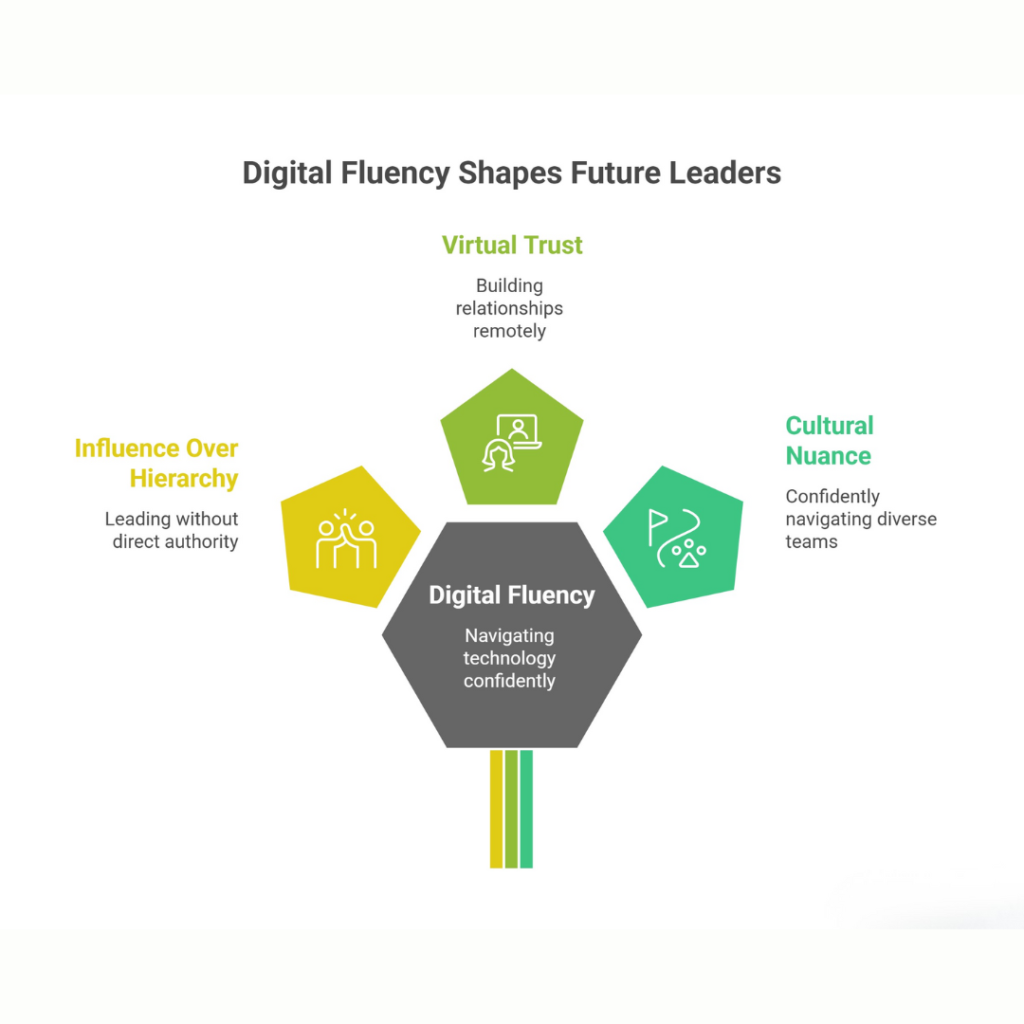
As companies grow across borders, leadership becomes less about hierarchy and more about influence. Middle managers must learn to lead without authority, build trust virtually, and navigate cultural nuance confidently.
That’s why leadership development for middle managers must integrate digital fluency, communication agility, and resilience. Future leaders will need to inspire teams they may never meet in person.
Global leadership development strategies that blend technology with humanity coaching, peer learning, and reflection will build the kind of leadership that endures.
Conclusion: Growing Leaders, Not Layers
Developing leadership in middle management isn’t about adding layers of hierarchy; it’s about growing layers of capability. The future of organisational success depends on how effectively we enable middle managers to lead with authenticity, empathy, and clarity.
When companies focus on strengths-based leadership for managers, mentorship, and well-being, they don’t just build better managers; they build a more human organisation.
Because leadership, at its best, isn’t a title. It’s a mindset that grows strongest in the middle.