

Most organisations say they want innovation. Fewer understand what consistently produces it.
Innovation does not emerge from pressure alone. It grows where employees believe they can improve, experiment, and contribute meaningfully. In other words, innovation thrives where a growth mindset in the workplace is supported by thoughtful leadership.
But mindset is only part of the equation.
When employees actively use their strengths and when leaders understand how to cultivate those strengths, innovative behaviour becomes more natural, more repeatable, and more sustainable. It stops being accidental and starts becoming cultural.
For CHROs, CEOs, and Boards, this is not simply a learning initiative. It is a leadership and organisational strategy.
Creating the Conditions for Growth and Innovation
Before focusing on programs or interventions, organisations must examine the environment they create.
Companies serious about employee growth mindset development must ensure:
- Employee-friendly systems and policies
- Transparent evaluation practices
- A culture where learning is valued as much as delivery
Without these foundations, asking employees to innovate feels contradictory. When mistakes are penalised harshly, experimentation disappears. When performance conversations focus only on short-term results, growth conversations shrink.
A strengths-based culture in organisations begins with psychological safety, but it extends further. It requires clarity around what the organisation values, not just performance, but contribution, curiosity, and capability development.
Only then can innovation and leadership development work hand in hand.
Rethinking Performance Reviews as Strategic Insight
Most performance reviews are transactional. Compensation is adjusted, promotions are decided, and documents are filed away.
However, when examined longitudinally over three or four years, performance data can reveal something more valuable: patterns of strengths use and behavioural consistency.
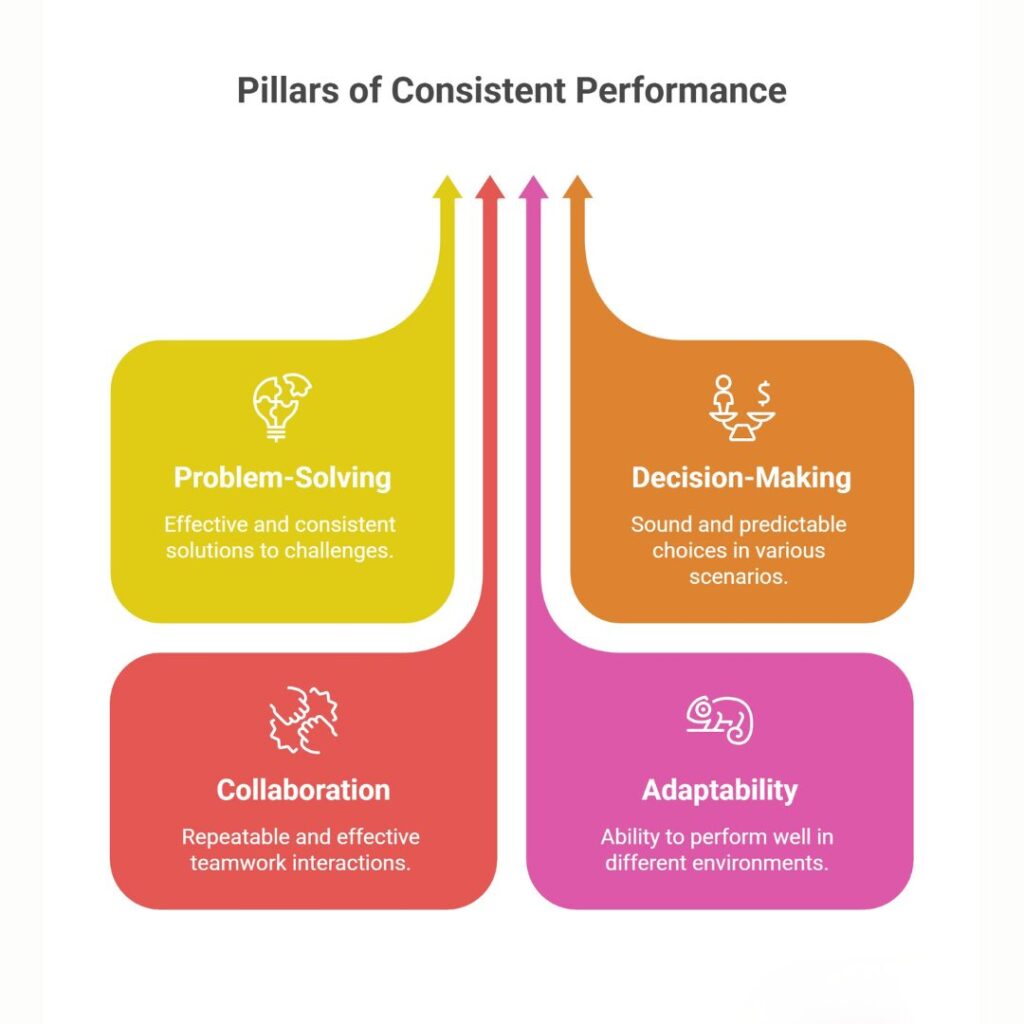
Consistent performers often demonstrate:
- Reliable problem-solving approaches
- Predictable decision-making quality
- Repeatable collaboration habits
- The ability to perform across varied contexts
These are not isolated outputs. They are indicators of how individuals apply their strengths.
When leaders analyse performance with this broader lens, they gain insight into the impact of employee strengths use on performance. They see who generates results through structured thinking, who thrives in dynamic environments, and who energises cross-functional teams.
Innovation frequently emerges from these consistent strengths patterns, not from occasional bursts of creativity.
Observable Attributes: Defining What Truly Matters
Innovative behaviour in organisations depends on attributes that are difficult to quantify. Ownership. Judgement. Courage to challenge assumptions. Constructive dissent.
Yet many organisations lack consistent criteria for evaluating these qualities. Managers define them individually, which creates inconsistency and bias.
Developing common behavioural criteria creates clarity. It enables leaders to recognise innovative contributions even when they do not immediately translate into financial results.
For example:
- Does the employee question outdated processes respectfully?
- Do they propose alternatives grounded in organisational priorities?
- Do they collaborate to refine ideas rather than defend them?
Such observable attributes signal a growth mindset in action.
By defining these behaviours collectively, organisations strengthen their leadership impact on innovation.
The Quad Framework: A Balanced Leadership Lens
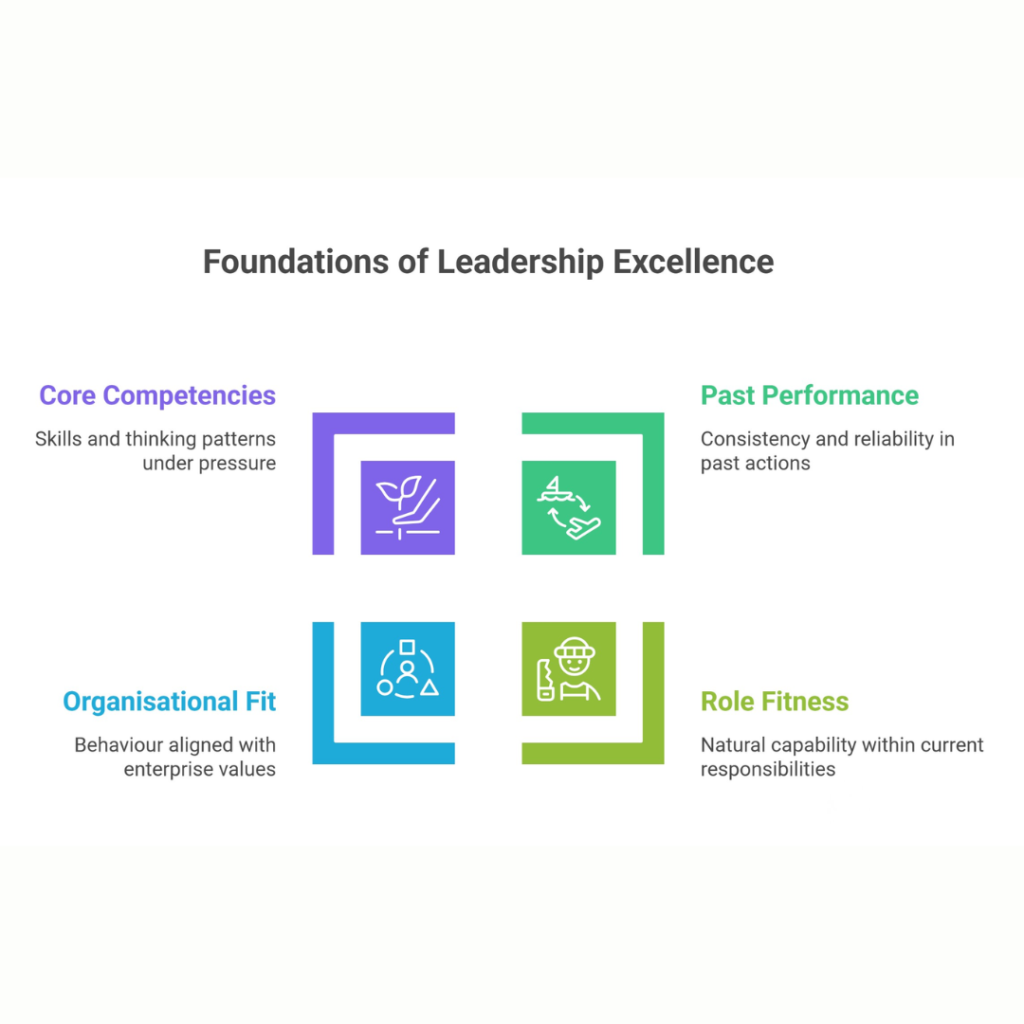
When considering employees for larger roles or when identifying high-potential contributors, leaders benefit from a structured approach. A balanced framework often includes:
- Past Performance – Consistency and reliability over time
- Role Fitness – Natural capability within current responsibilities
- Organisational Fit – Behaviour aligned with enterprise values
- Core Competencies – Skills and thinking patterns under pressure
This quad perspective prevents narrow decisions based solely on output. It also highlights employees who may possess strong innovative potential but require different contexts to fully express it.
Leadership development for organisational growth depends on recognising these multi-dimensional factors.
Strengths: Use as a Catalyst for Innovative Behaviour
Here is a subtle but powerful shift: innovation increases when employees operate from their strengths rather than constantly compensating for weaknesses.
When individuals use their natural patterns of thinking and behaviour:
- Confidence increases
- Cognitive energy is conserved
- Risk-taking becomes measured rather than reckless
- Collaboration becomes more authentic
This does not mean ignoring development areas. Rather, it means building innovation on a stable foundation.
Research in positive psychology consistently shows that strengths use correlates with higher engagement and performance. In organisational terms, engagement fuels experimentation and experimentation fuels innovation.
This is how strengths-based leadership development supports innovative behaviour without forcing creativity through pressure.
Leadership Practices That Encourage Growth Mindset
A growth mindset in the workplace does not arise from motivational messaging. It emerges from consistent leadership practices.
Leaders who foster innovative behaviour typically:
- Frame challenges as learning opportunities
- Reward thoughtful experimentation
- Provide developmental feedback focused on capability expansion
- Encourage reflection after both success and failure
Notice what is absent: fear-based accountability.
When leaders focus exclusively on error avoidance, employees become cautious. When leaders focus on learning velocity, employees become curious.
The role of leadership in employee innovative behaviour is therefore both structural and behavioural. Leaders shape context. They also model mindset.
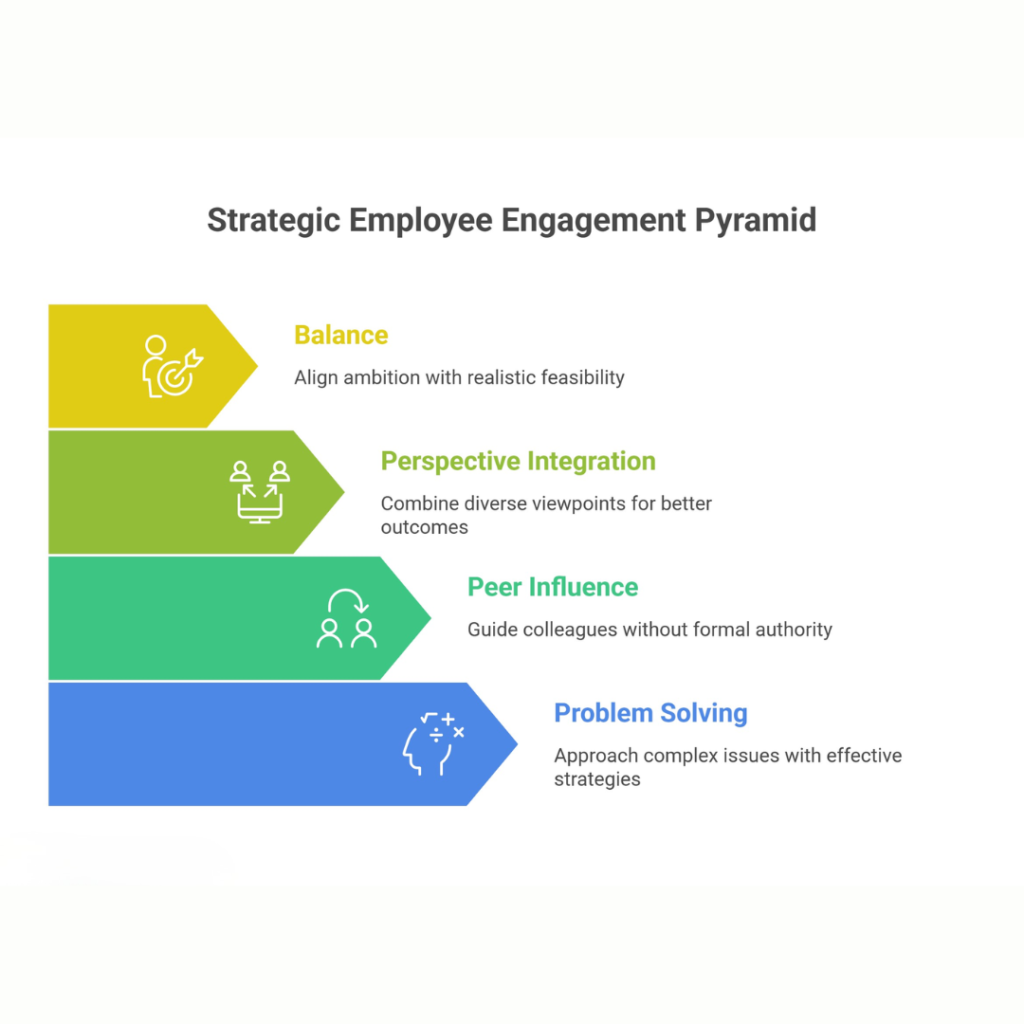
Developing Innovative Employees Through Structured Involvement
Organisations seeking to drive innovation through people development often overlook one practical lever: meaningful involvement.
Strategically engaging select employees in organisation-wide initiatives reveals how they:
- Approach complex problems
- Influence peers without authority
- Integrate diverse perspectives
- Balance ambition with feasibility
Senior leaders observing these behaviours gain insight into innovative capacity that traditional reviews may miss.
Importantly, involvement should not be reserved solely for elite groups. Developing high-performance teams through strengths requires broad participation. Innovation ecosystems thrive when diverse contributors are given space to think.
Strengths-Based Leadership as an Innovation Multiplier
Strengths-based leadership programs for enterprises do more than build individual capability. They shape how leaders think about talent.
When leaders understand their own strengths, they become more intentional in:
- Delegating responsibilities
- Designing team compositions
- Managing energy within projects
- Responding to setbacks
This awareness reduces reactive leadership and increases deliberate development.
Over time, strengths-based leadership training for organisations influences culture. It shifts conversations from “Who made the mistake?” to “What strengths can we bring to solve this?”
That subtle change compounds.
It fosters a positive psychology leadership approach grounded in capability, not deficiency.
Addressing Retention and Engagement Through Strengths
The changing attitude among younger workforce segments reflects a desire for meaningful contribution, growth, and balance.
Employees disengage not only from workload pressures but from environments where their strengths remain underused.
When organisations invest in employee strengths development programs, they communicate something important: individual contribution matters.
This supports:
- Retention of high-potential employees
- Reduced disengagement
- Greater commitment to organisational innovation strategy and leadership
Strengths-based cultures also support well-being indirectly. When people operate from natural strengths, work feels more energising and less draining. That matters in an era where mental health and work–life balance influence employment decisions.
How Strengths-Based Leadership Drives Innovation at Scale
For innovation to become systemic rather than sporadic, leadership must operate coherently across levels.
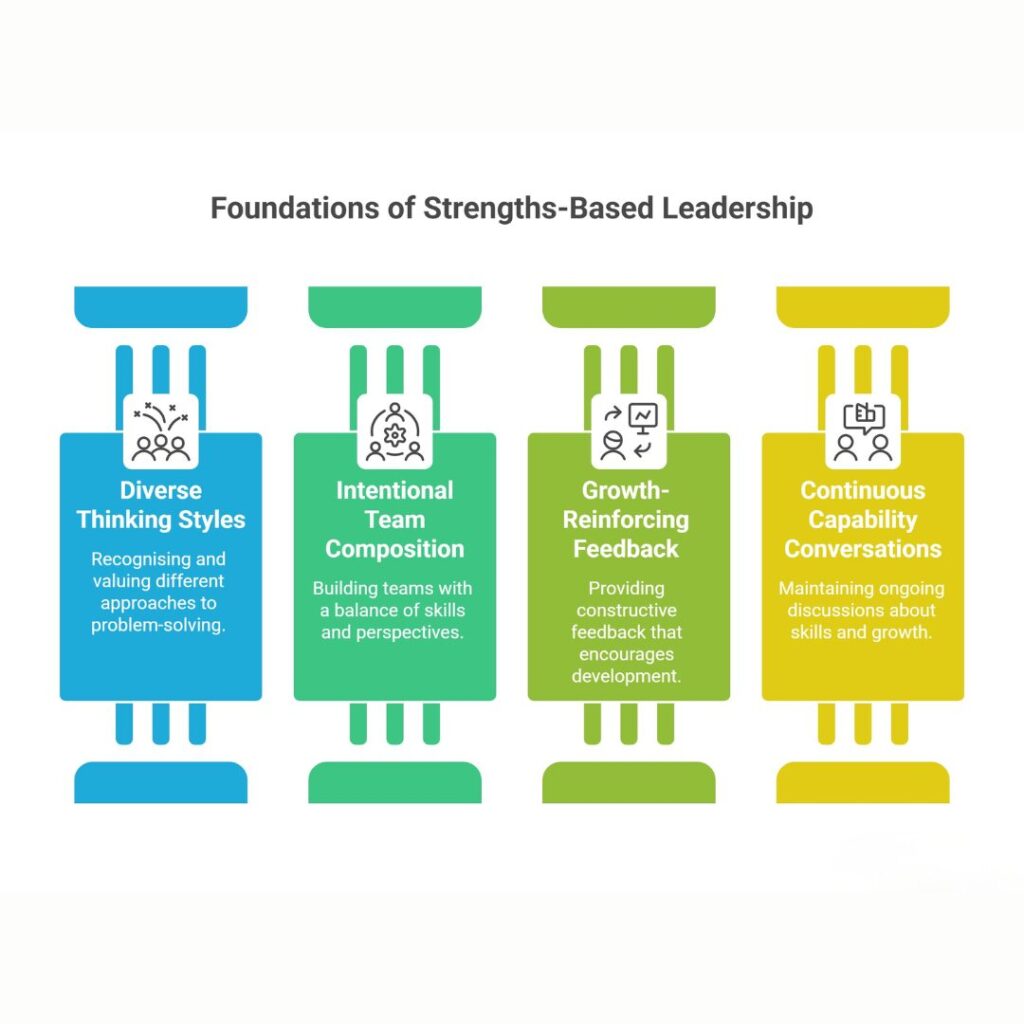
Strengths-based leadership development ensures that:
- Managers recognise diverse thinking styles
- Teams are composed intentionally
- Feedback reinforces growth
- Capability conversations remain continuous
This creates a reinforcing cycle:
Strengths awareness → Growth mindset → Increased experimentation → Innovative behaviour → Organisational learning.
When embedded deeply, innovation becomes less dependent on charismatic individuals and more embedded in systems.
That is the difference between episodic creativity and sustained innovation.
Conclusion: Building Innovation Through People Capability
Innovation is often framed as a strategic initiative. In reality, it is a people capability.
Organisations that cultivate a growth mindset in the workplace, encourage strengths use, and invest in strengths-based leadership development create conditions where innovative behaviour becomes predictable.
For Boards and executive leaders, the message is clear:
Innovation is not driven solely by technology or capital. It is driven by how effectively leaders develop and deploy human strengths.
When employees are encouraged to grow, apply their strengths, and contribute authentically, organisations do more than improve performance. They build cultures capable of adapting, evolving, and leading in uncertain environments.
That is not accidental. It is intentional leadership.

A really good blog and me back again.
Every day is a new beginning