

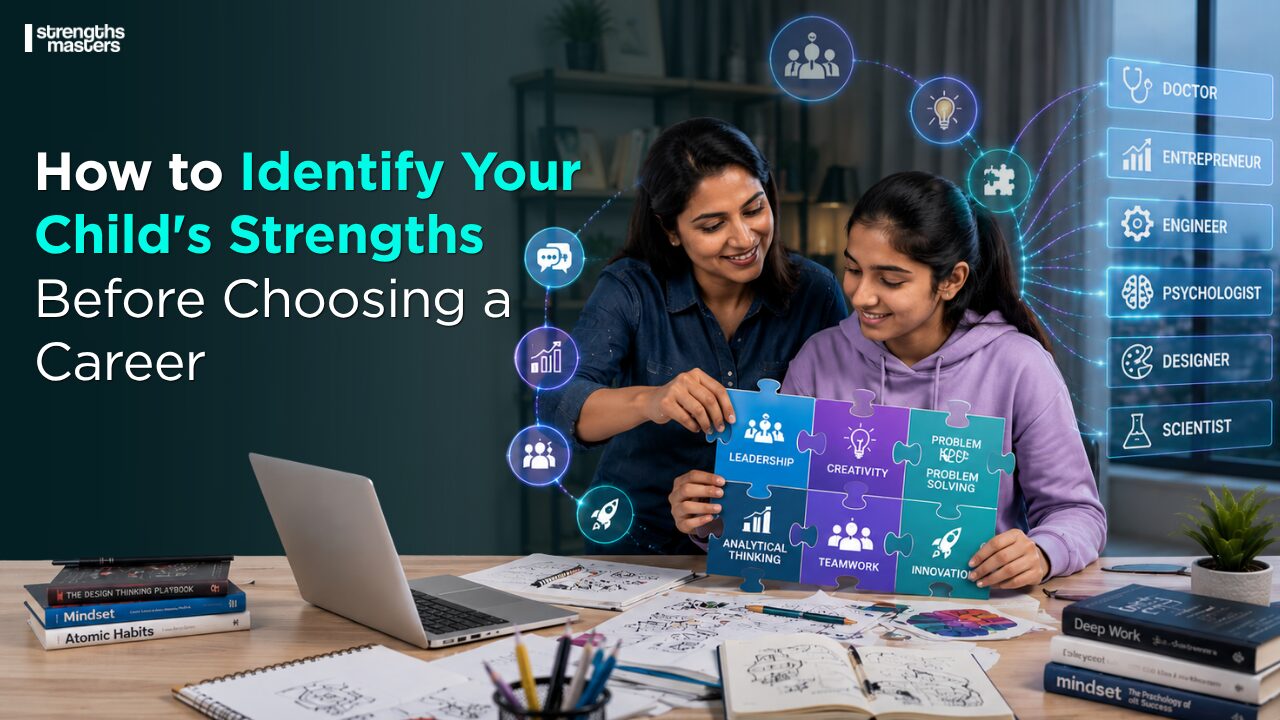
- Career decisions become easier when students understand their strengths first.
- Marks and interests alone do not reveal long-term career fit.
- Parents play a crucial role in helping children discover their natural strengths.
- Strengths are often visible through recurring behaviours, not just academic performance.
- A strengths-based approach can improve career clarity and confidence.
Why Most Career Planning Starts in the Wrong Place
When parents begin thinking about their child’s future, the conversation often starts with careers.
Should they become a doctor? Engineer? Lawyer? Entrepreneur?
While these questions are understandable, they often come too early.
One of the biggest mistakes families make is trying to choose a career before understanding the student.
At Strengths Masters, we frequently observe that students are expected to make career decisions based on marks, popular trends, or external advice. However, very few students are first helped to understand how they naturally think, learn, solve problems, and interact with the world.
This creates confusion.
Career choices are external decisions. Strengths are internal realities. When students understand their strengths first, career planning becomes significantly clearer and more personalised.
The better question is not:
“Which career should my child choose?”
The better question is:
“What are my child’s natural strengths, and where can those strengths create success?”
What are the strengths?
Many parents confuse strengths with skills, interests, or academic performance. However, strengths are different. Strengths are natural patterns of thinking, behaving, learning, and solving problems that consistently show up over time.
A student who naturally organises people may demonstrate leadership strengths. A student who enjoys understanding systems and patterns may possess analytical strengths. A student who naturally builds relationships may have strong communication or interpersonal strengths. Unlike interests, strengths tend to remain relatively stable over time. Unlike marks, strengths are not limited to a single subject or examination.
They influence how students perform across academics, extracurricular activities, relationships, and eventually careers. This is why strengths-based career planning is becoming increasingly important in modern education.
Why Marks Alone Cannot Reveal Strengths
Many parents use report cards as the primary indicator of future success. While academic performance provides useful information, it tells only part of the story. A student may score highly in science but dislike scientific work. Another student may achieve average marks while demonstrating exceptional leadership, creativity, communication, or entrepreneurial thinking.
Research from the World Economic Forum’s Future of Jobs Report highlights the growing importance of skills such as problem-solving, adaptability, communication, and critical thinking in the future workforce. These capabilities often emerge from underlying strengths rather than examination scores alone.
This means that relying exclusively on marks can sometimes lead families toward careers that appear successful on paper but may not align with the student’s natural abilities.
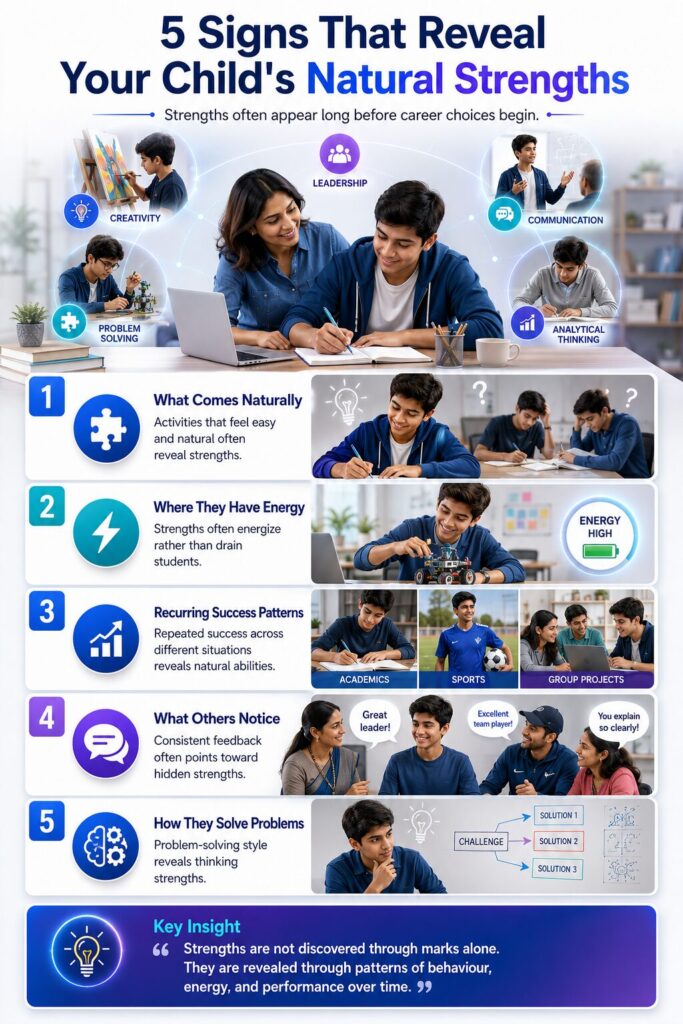
Five Signs That Reveal Your Child’s Natural Strengths
Parents often ask:
“How can I identify my child’s strengths if they haven’t taken a formal assessment?”
While professional guidance can help, strengths often leave clues in everyday life.
1. Notice What Comes Naturally
Every child has activities that seem easier for them than for others.
Some students naturally explain concepts.
Others naturally solve problems.
Some naturally take initiative in group situations.
Pay attention to tasks your child performs effortlessly and repeatedly.
These patterns often indicate strengths.
2. Observe Where They Show Consistent Energy
Students may perform many activities, but only a few genuinely energise them.
After certain activities, they appear excited and motivated rather than exhausted.
Energy is often a valuable indicator of strengths.
3. Look Beyond Academic Subjects
Strengths are not limited to school subjects.
Leadership, empathy, creativity, resilience, communication, and strategic thinking can all become valuable career assets.
Many successful careers depend more on these strengths than on academic excellence alone.
4. Identify Recurring Success Patterns
Ask yourself:
“When does my child usually perform at their best?”
The answer often reveals important strengths.
Success patterns tend to repeat across different situations.
5. Listen to External Feedback
Teachers, mentors, coaches, relatives, and friends often notice strengths that parents overlook.
Consistent feedback from multiple sources can provide valuable clues.
The Difference Between Interests and Strengths
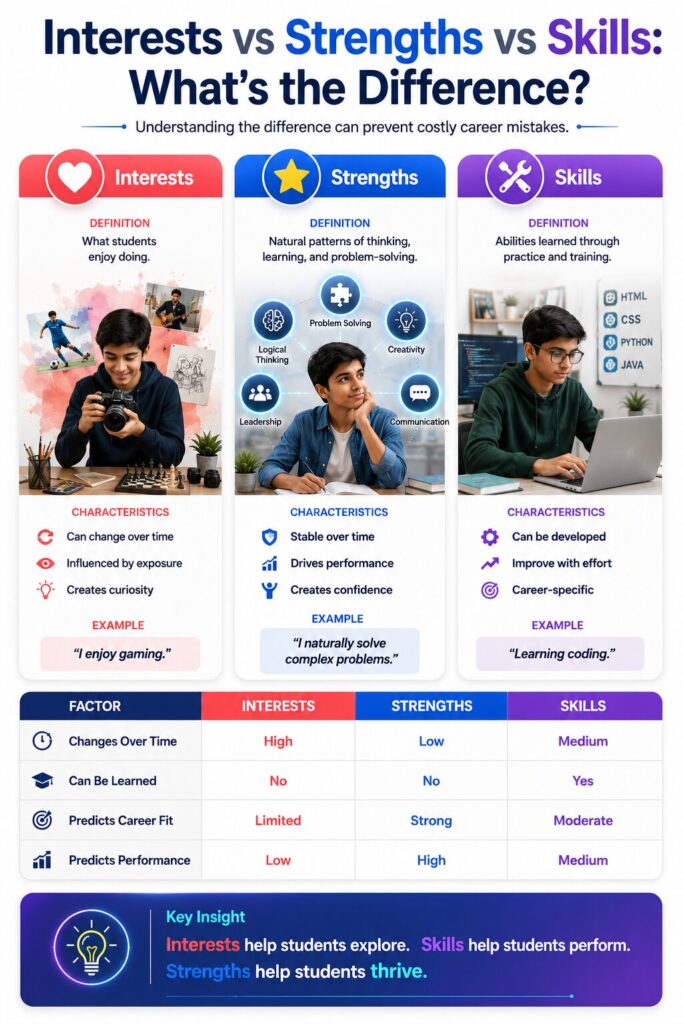
One reason career decisions become difficult is that many families focus exclusively on interests.
Interests matter.
However, interests can change.
A student may become interested in a particular career after watching videos, following trends, or seeing peers pursue similar paths.
Strengths operate differently.
They reflect how a student naturally performs.
For example, a student may be interested in medicine but struggle with the type of analytical and scientific work required. Another student may have strong strengths aligned with healthcare but never initially consider the field. This is why career decisions should ideally evaluate both interests and strengths rather than relying on either factor alone.
A Strengths Masters Insight
One pattern we consistently observe at Strengths Masters is that students often know which careers they admire, but they struggle to explain why those careers fit them personally. Many families spend significant time researching professions but very little time understanding the student. As a result, career planning becomes a process of comparison rather than self-discovery.
The students who gain the most clarity are usually those who first understand their strengths and then explore careers that align with those strengths.
Career clarity rarely comes from searching harder. It usually comes from understanding yourself better.
How Strengths Masters Helps Students Discover Their Strengths
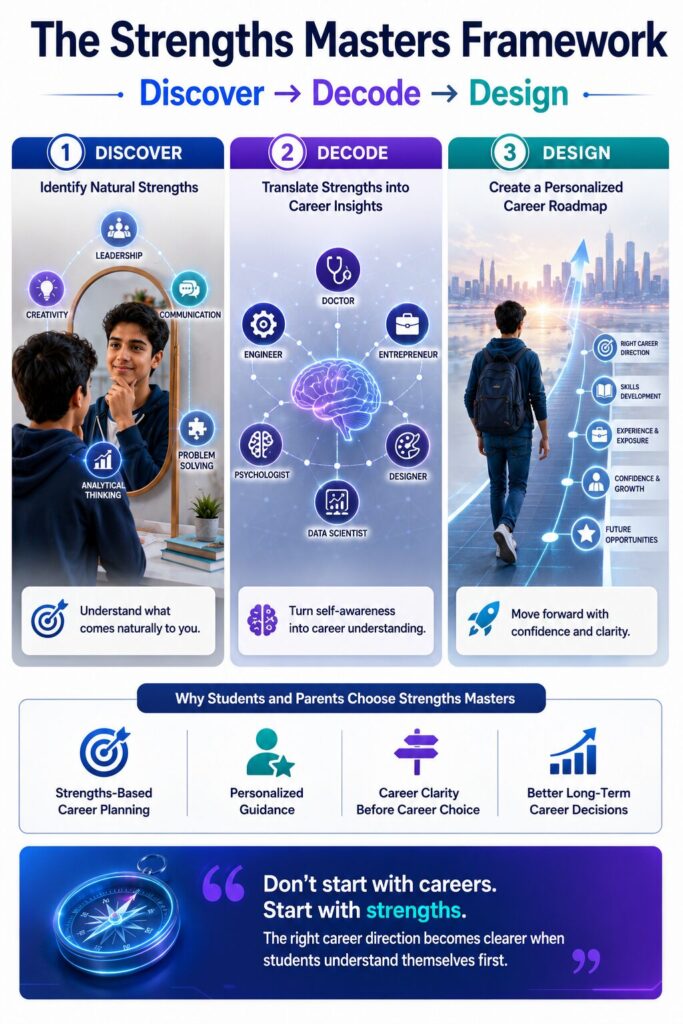
At Strengths Masters, we use our strengths-based approach to help students move beyond guesswork and develop genuine career clarity.
Our framework follows three key stages:
Discover
Students identify their natural strengths, behavioural patterns, learning preferences, and recurring success indicators.
Decode
Those strengths are translated into meaningful insights about education, career directions, and future opportunities.
Design
Students create a personalised roadmap that helps them make confident and informed career decisions.
Rather than starting with careers, we start with self-awareness. This helps students make choices that are more aligned, sustainable, and fulfilling over the long term.
For parents seeking a deeper understanding of strengths-based development, our Strengths for Students program provides structured guidance designed specifically for students and families.
What Parents Should Do Next
Parents do not need to have all the answers. They do not need to choose a career for their child. Their most important role is helping students understand themselves. The future job market will continue to evolve, and many careers will change dramatically over the coming years.
What will remain valuable are the strengths that help individuals learn, adapt, communicate, lead, and solve problems. When parents focus on helping students discover these strengths first, career decisions become less stressful and more meaningful.
The goal is not to find the most popular career. The goal is to find the career direction that best aligns with who the student truly is. And that journey always begins with understanding strengths before choosing a career.
Frequently Asked Questions:
1. How can parents identify their child’s strengths?
Parents can identify their child’s strengths by observing activities that come naturally to them, noticing where they show enthusiasm and confidence, recognising recurring patterns of success, and listening to feedback from teachers, coaches, and mentors. Strengths usually reveal themselves through consistent behaviours over time rather than through one-time achievements.
2. Why is identifying strengths important before choosing a career?
Identifying strengths before choosing a career helps students make decisions that align with their natural abilities and ways of thinking. When career choices are based on strengths, students are more likely to stay engaged, perform better, and experience long-term satisfaction and growth.
3. Are strengths different from interests?
Yes. Interests are activities or subjects that students enjoy and can change over time. Strengths are natural and recurring patterns of thinking, learning, and problem-solving that remain relatively stable. While interests help students explore possibilities, strengths often provide stronger clues about long-term career fit.
4. Can academic marks reveal a child’s strengths?
Not entirely. Academic marks show performance in specific subjects or assessments, but they do not fully reveal qualities such as leadership, creativity, communication, empathy, resilience, or problem-solving abilities. Career planning should consider both academic performance and natural strengths.
5. At what age should parents start helping their child discover strengths?
Parents can begin helping children discover their strengths during middle school or early adolescence. The goal is not to force career decisions early but to encourage self-awareness, exploration, and meaningful conversations that help students better understand themselves.
6. What are some signs that indicate a child’s natural strengths?
Common signs include activities that feel effortless to the student, areas where they consistently perform well, tasks that energise them, situations where they naturally take initiative, and strengths repeatedly noticed by others. These patterns often provide valuable insights into a student’s future potential.
7. How does Strengths Masters help students identify their strengths?
Strengths Masters uses a strengths-based approach that helps students discover their natural talents, understand how their strengths influence learning and performance, and connect those strengths to suitable career directions. Through the Discover → Decode → Design Framework, students gain greater self-awareness and make more informed career decisions.
8. What is the best way to help a child choose the right career?
The best way to help a child choose the right career is to start with self-awareness rather than professions. Parents should encourage students to understand their strengths, explore different opportunities, research career paths, and make decisions based on long-term fit instead of pressure, trends, or marks alone.