

When Work Happens but Progress Doesn’t
You’ll see this often in teamwork is happening, people are busy, deadlines are approaching…but when you really look closely, progress feels unclear. Things slip at the last moment, surprises come up in final reviews, and managers suddenly find themselves chasing updates instead of leading direction.
This usually doesn’t happen because people aren’t capable. It happens because the review isn’t happening the right way or isn’t happening consistently at all.
Without regular, meaningful reviews, small issues remain hidden until they become big problems. Priorities drift, ownership weakens, and accountability slowly fades.
On the flip side, when reviews are done well, something powerful shifts. Teams become more aware of their progress, issues get resolved early, and goals start to feel achievable rather than overwhelming.
So the question isn’t whether reviews are needed.
It’s how managers can review work in a way that actually drives progress.
Why Review Matters More Than We Think
Many managers assume that once goals are set, execution will follow naturally.
But here’s the reality
What gets reviewed gets done.
A review is not about checking work. It’s about creating visibility.
When managers regularly review progress:
- Teams stay focused on what matters
- Gaps are identified early
- Ownership becomes visible
- Conversations become clearer
Without review, even well-set goals lose direction over time.
That’s why review becomes the bridge between goal setting and actual execution.
What a Better Review Actually Looks Like
A good review doesn’t feel like pressure. It feels like clarity.
Instead of asking, “What’s the update?”, effective managers shift the conversation to outcomes:
- What progress has been made?
- What is still pending?
- What challenges are coming up?
- What support is needed?
This simple shift changes everything.
Now, review becomes less about reporting and more about moving work forward.
How Managers Can Conduct Better Reviews
Let’s make this practical.
Managers who run effective reviews usually follow a few consistent habits, not complex systems, just disciplined behaviour.
Key Review Practices:
- Set a fixed review rhythm (weekly or bi-weekly)
- Focus on outcomes, not activity
- Keep discussions short and structured
- Encourage ownership from team members
- Identify risks early, not at the end
These practices create something very important: progress visibility.
And once progress is visible, managing becomes easier.
A Simple Review Checklist Every Manager Can Use
Sometimes managers struggle not because they don’t want to review, but because they don’t know what to check.
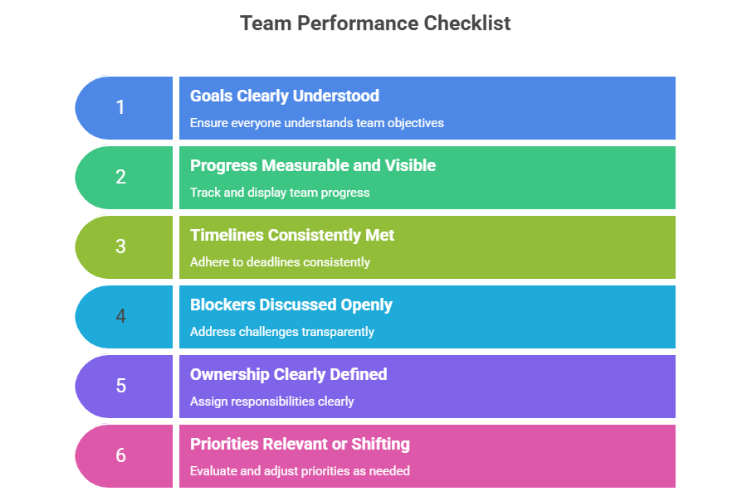
Here’s a simple checklist that works across teams:
- Are goals clearly understood by everyone?
- Is progress measurable and visible?
- Are timelines being met consistently?
- Are blockers being discussed openly?
- Is ownership clearly defined?
- Are priorities still relevant or shifting?
This checklist keeps reviews focused and meaningful.
Review Without Micromanaging: Yes, It’s Possible
One of the biggest fears managers have is this:
“If I review too much, won’t I look like I’m micromanaging?”
Fair concern.
But here’s the difference:
- Micromanaging = controlling how work is done
- Reviewing = understanding what is getting done
Effective managers don’t interfere in every detail.
They simply ensure that progress is visible and aligned.
They ask questions, not give constant instructions.
And that’s what builds both accountability and trust at the same time.
How Review Helps in Achieving Goals
Let’s connect this back to goals.
You can set the clearest goals in the world, but without review, they remain intentions.
Review turns goals into movement.
Here’s how:
- Keeps teams focused on priorities
- Tracks whether work is moving in the right direction
- Helps adjust plans early
- Reinforces accountability regularly
In simple terms:
Goals set direction. Review ensures progress.
Without review, goals fade.
With review, goals get achieved.
Connecting the Dots: From Trust to Execution
If you look at this as a journey, it becomes clearer:
- Role Modelling → builds trust
- Goal Setting → creates clarity
- Review → drives execution
Each step builds on the previous one.
For example, if a manager has already built credibility through behaviour (as discussed in the earlier blog on role modelling), team members are more open during reviews.
And when goals are clear (from the previous goal-setting blog), reviews become sharper and more focused.
That’s how leadership starts becoming consistent, not fragmented.
Where Structured Development Makes It Easier
Let’s be honest, most managers aren’t taught how to review effectively.
They learn through trial and error.
Some figure it out.
Many struggle quietly.
That’s why structured learning journeys are becoming important.
Programs like the 5 Skills for First-Time Managers by Strengths Masters focus on practical leadership behaviours, role modelling, goal setting, review, feedback, and coaching.
The idea is simple:
help managers build these capabilities step by step, in real work contexts.
Not heavy theory.
Just clear, usable practices.
Because when managers understand how to review work properly, a lot of everyday challenges start reducing on their own.
Final Thoughts
Review is often seen as a routine activity. But in reality, it’s one of the most powerful tools a manager has.
Done poorly, it creates pressure and confusion.
Done well, it creates clarity and momentum.
And the difference isn’t in tools or systems. It’s in how managers approach it. So if you’re managing a team today, here’s something worth reflecting on:
Are you reviewing work to check progress or to drive it?
Because that small shift changes everything.
Frequently Asked Questions:
1) Why do teams fail without regular reviews?
Teams often fail without regular reviews because there is no clear visibility on progress, gaps, or challenges. Without consistent check-ins, small issues grow into bigger problems, leading to missed deadlines, confusion, and a lack of accountability across the team.
2) How do managers track team progress effectively?
Managers track team progress effectively by setting regular review cycles, using clear metrics, and having structured conversations. Instead of micromanaging, they focus on outcomes, identify blockers early, and ensure the team stays aligned with goals.
3) How to conduct effective review meetings?
Effective review meetings focus on clarity, not criticism. Managers should discuss progress, challenges, and next steps. Keeping reviews structured, data-driven, and solution-oriented helps teams stay focused and improves performance without creating pressure.
4) How do managers ensure accountability in teams?
Managers ensure accountability by setting clear expectations, tracking progress regularly, and following up consistently. When team members know what is expected and reviews are frequent, ownership naturally increases.
5) How do performance reviews improve team results?
Performance reviews improve results by identifying gaps early, reinforcing priorities, and aligning efforts with goals. They help teams stay on track, improve consistency, and continuously refine their approach to achieve better outcomes.
6) What is the role of managers in tracking team performance?
Managers play a critical role in tracking team performance by monitoring progress, guiding direction, and providing timely feedback. Their involvement ensures clarity, reduces confusion, and helps the team maintain focus on what truly matters.